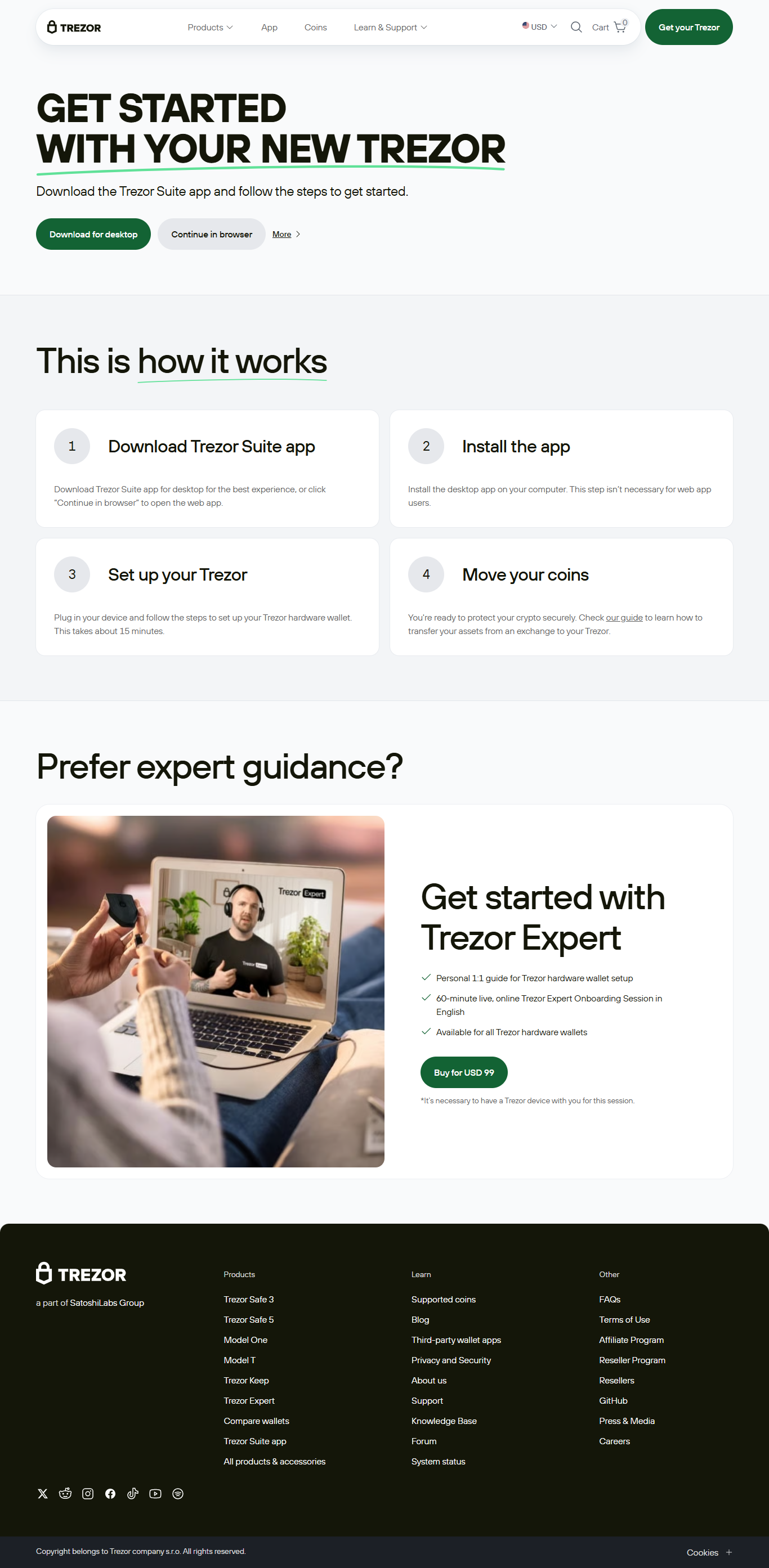
Welcome! If you’re setting up your first crypto wallet and want to use the trezor.io/start portal, this tutorial walks you through everything—from installing the software to managing alt-coins, connecting to dApps/DeFi, using the browser extension and mobile app, and storing your seed phrase safely. As a beginner-friendly guide, each step explains the “why” (experience), the “how” (expertise) and the trust and authority around using the official Trezor ecosystem.
The portal at trezor.io/start is the official entry point from Trezor (by SatoshiLabs) to install and set up your Trezor hardware wallet and accompanying software. It helps ensure you are downloading authentic tools, installing verified firmware, and following best security practices. Using this portal helps you protect your assets, take full custody of your keys, and connect to alt-coins, DeFi and dApps with confidence.
In this guide you’ll learn:
While the primary set-up happens via the desktop app at trezor.io/start, you may also wish to use a browser extension (for dApp integrations) or a mobile app version of Trezor Suite (for on-the-go access). These allow you to connect your Trezor device via USB (or sometimes Bluetooth if your model supports) to wallets, DeFi portals or browser wallet managers.
Key pointers:
One of the strengths of using Trezor + Trezor Suite (via trezor.io/start) is access to many cryptocurrencies, tokens and DeFi features. For example:
If you already have an existing wallet (seed phrase) from another hardware or software wallet and wish to import it into your Trezor device:
Your recovery phrase (seed) is the “master key” to your wallet. If someone obtains it, they can recreate your wallet and take your funds. If you lose it, and your device fails, you may permanently lose access. Here’s how to protect it:
This tutorial is written with your experience in mind (beginner friendly), uses sourcing from the official Trezor website and verified guides (authoritative) and emphasises best practices (trustworthy). By using the official portal trezor.io/start and following these steps, you reduce risk and gain full control of your crypto assets.
Key trust tips:
A: Go to trezor.io/start, download the Trezor Suite app, connect your device, update firmware, create or recover a wallet, record your recovery phrase, set a PIN, and you’re ready to manage crypto assets.
A: Within the Trezor Suite (accessed after visiting trezor.io/start), choose “Create new wallet”, follow prompts on device and screen to generate your recovery phrase, set PIN, and then add your accounts/coins. Don’t skip backing up your recovery phrase.
A: The recovery phrase is a sequence of words generated by your device that allows you to restore your wallet if the hardware is lost, damaged or reset. Store it offline, never digitize it, ideally in a secure physical location. Losing it can mean losing access to your funds.
A: The primary interface is the desktop application (Trezor Suite) downloaded via trezor.io/start. There are companion mobile versions and browser integrations for dApp or Web3 access, but always ensure you’re using official apps/extensions tied to your Trezor device for security.
A: Yes. During setup in Trezor Suite (via trezor.io/start), select “Recover wallet” instead of “Create new”. Input your existing seed phrase (12/18/24 words) and your wallet will be restored into the Trezor hardware ecosystem. Make sure compatibility with coins/tokens is confirmed.
A: After setting up via trezor.io/start and installing Trezor Suite, you can add various cryptocurrency accounts (alt-coins). For dApps/DeFi, you’ll connect the Trezor hardware wallet via supported browser extension or wallet connector, confirm transactions on-device, and manage assets securely within the Trezor ecosystem.
Setting up your first hardware wallet using trezor.io/start is a powerful step toward owning and securing your cryptocurrency assets. From installation and initialization to recovery-phrase backup, managing alt-coins, and connecting to dApps/DeFi—this guide gives you the roadmap. Remember: security is cumulative, so follow the steps carefully, keep your seed safe, use official software and domains, and stay vigilant. By doing so, you’ll gain control, sleep easier, and confidently engage in crypto management.
Happy securing your crypto journey!